The Kinetic Sculpture That Draws Infinite Patterns On Sand.
Latest Updates from Our Project:
Thu Aug 5 '21 Announcement
over 4 years ago
– Thu, Aug 05, 2021 at 10:33:08 AM
Hi guys,
The last weeks have been very demanding regarding the production process, we received questions about the current status, so we will focus this update on giving you a catch-up.
Components production
As you can recall from previous updates, SANDSARA’s mechanism is fully produced. We ran some tests and decided to improve the shaft. Our suppliers made some samples and ran another round of tests; then, they sent some samples to us for final revision to start full reworking. Unfortunately, customs in our country made the process very difficult, all the samples were under inspection for around 20 days, but finally, they are liberated!
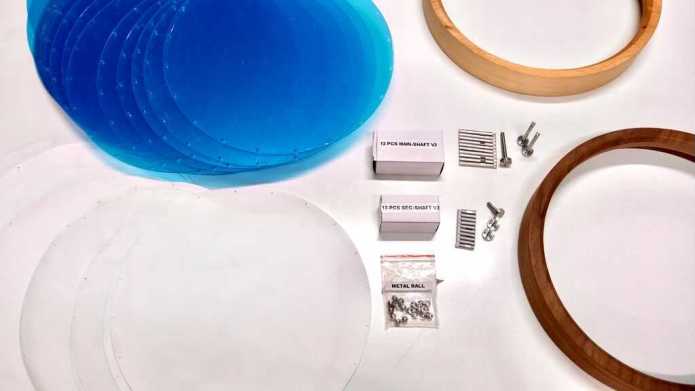
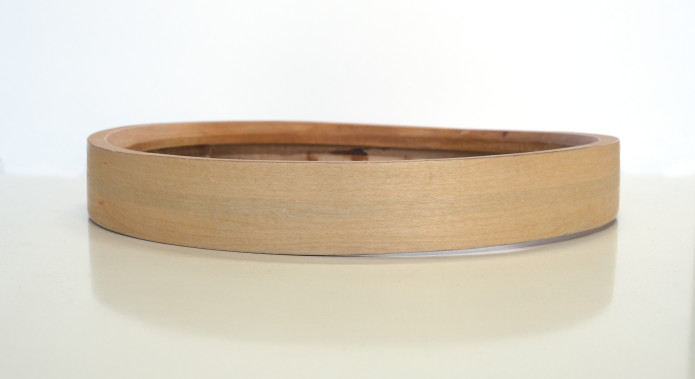
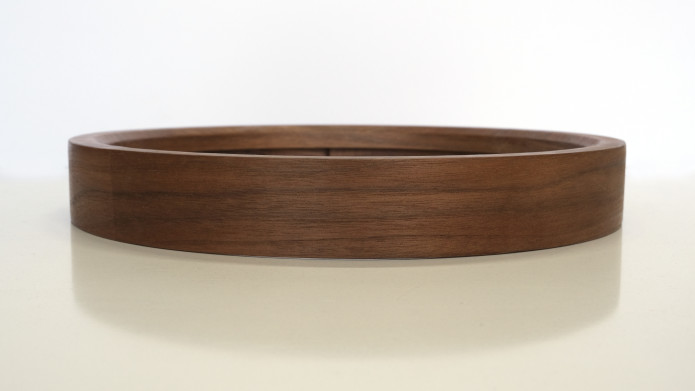
These are some of the final samples we received a few days ago for the in-house quality check. In addition to the wood rings, we received shafts, fabric, metal balls, and sand beds.
Going back to production status, currently, we have 74% of the production finished. Besides the wood rings and the shafts, all the custom-made components are completed!
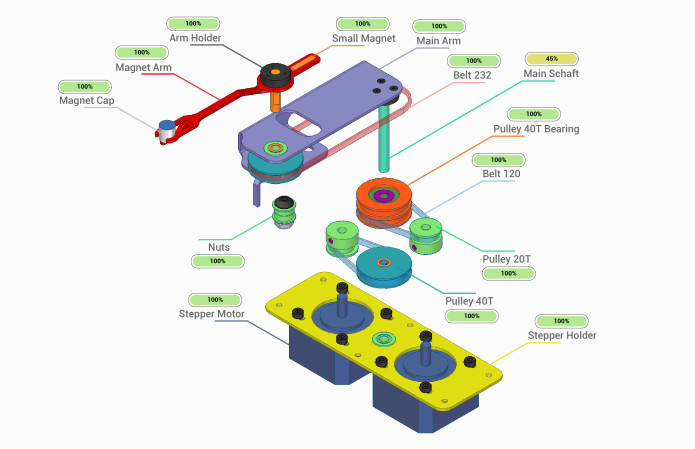
Production progress summary of mechanism components
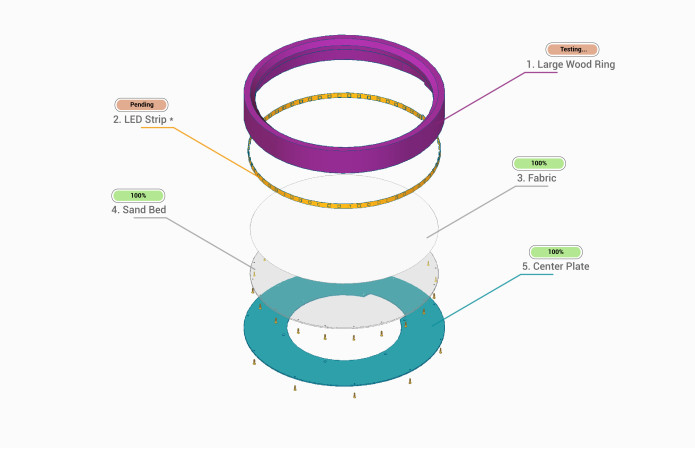
Production progress summary of upper case components
Production progress summary of bottom case components
The remaining 26% are mainly off-the-shelf components such as SD cards, LEDs, and sandbags. We have already secured most of these components, but we’ll ship them to our manufacturer partner once we are closer to assembly.
Our next steps
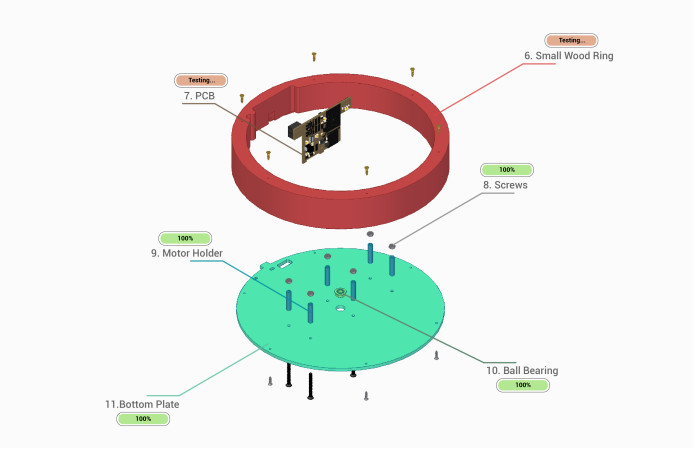
During the last months, we’ve been testing different stacks for the wood rings. This process had a lot of back and forth and made us iterate with every test to improve the wood rings design. Up today, the last two versions are under testing. We feel pretty confident about how this process is going on. We already understand the main pain points in wood and composites for long-term testing, and every iteration was an improvement.
This is one of the first production samples, which showed major deformations after being tested in extreme humidity conditions, so we worked with our suppliers to improve it.
This is one of the last production samples, which showed great stability after being tested in extreme humidity conditions.
The timeline remains as expected; if anything changes in the next steps, we will update the information. Thanks again for your continuous support and encouragement, and please keep the questions and suggestions coming.
Best,
The Sandsara Team
Mon Jul 19 '21 Announcement
over 4 years ago
– Mon, Jul 19, 2021 at 02:18:48 PM
Hi guys,
As you must know we’ve been sharing all the project’s files and we are really excited to see a lot of you have been exploring our repository. These past few weeks, we’ve also received a lot of questions about the Bluetooth files, the code’s structure, and requests for sharing an onboarding; so we prepared this update to clarify the most commonly asked questions.
SANDSARA’s software onboarding
To write SANDSARA's software we used C++ language, Arduino libraries, and the Arduino core for the ESP32, plus other dependencies. We used a combination of object-oriented and structured programming; this means we created classes that allowed us to manage our hardware, such as the movement of motors, reading files, calibrating the SANDSARA robot, among other functions.
In order to have an easy and quick compilation, we used Platformio IDE for Visual Studio Code. You can find all the required dependencies in the file "patformio.ini". When the project is compiled, the PlatformIO plugin automatically downloads all the necessary dependencies. But before, you need to modify 2 lines of the core of Esp32:
Follow the instructions to compile the project:
Download Visual Studio Code.
Install the PlatformIO extension
Clone the repository.
Open the folder repository in VS Code.
Modify the next lines in the HardwareSerial.cpp file (this file is part of the Core of the ESP32)
line 10: #define RX1 9 change to #define RX1 26
line 14: #define TX1 10 change to #define TX1 27.
Press "platformIO: Build".
Done.
From here, you can explore the code and documentation, please feel free to reach out if you have any questions.
Bluetooth Documentation
To communicate Sandsara with a mobile device we used Bluetooth Low Energy (BLE) technology, this way you can change SANDSARA's features quickly and easily. From your mobile, you can change the LED's color and brightness, ball's speed, name of your device, select new paths, etc.
To clearly explain the structure of the BLE, we organized the parameters according to services and features. For example, the four services are called "General Service", "File Service", "Playlist Service," and "LedStrip Service". Each service has a very descriptive name to identify what info you can find there easily. In the case of "LedStrip service", you'll find features to modify the LEDs' brightness, color, speed, direction, etc.
To better understand how BLE technology works and what we mean by services and features, we suggest you take a look at the following links:
All the code’s files are organized in two main folders: include and src. The include folder contains all the headers declaring classes; in the src folder, each class function is defined. The files tree is as below:
Sandsara
|--docs/
|--html/
|--imagesFolde/
|--include/
|--Bluetooth.h
|--main.h
|--leds.h
|--Motors.h
|--SdFiles.h
|--Testing.h
|--WorkingArea.h
|--src/
|--Bluetooth.cpp
|--main.cpp
|--Motors.cpp
|--SdFiles.cpp
|--Testing.cpp
|--WorkingArea.cpp
|--simulator/
In the .cpp files, you can find all the functions of the classes, each class has a specific function.
The Bluetooth class is responsible for the BLE (Bluetooth low energy) communication.
The Motors class is responsible for moving the motors in SANDSARA’s working area.
The SdFiles class is used to read thepath files from the micro sd memory.
The Testing class performs all the tests which determine if all electronic components are in good condition.
The WorkingArea class moves the magnet arm tip to find the origin of the workable space.
Thanks for your support and for reading through our biweekly update!
Best,
The Sandsara Team
Thu Jul 1 '21 Announcement
almost 5 years ago
– Thu, Jul 01, 2021 at 02:49:00 PM
Hi guys,
Thanks to all of you who have been sharing their comments and doubts regarding the files we’ve been sharing in the repository. This week we published the app’s code!
If you want to explore more about the code, take a look at our repository at the following link:https://www.sandsara.io/about
Releasing the code gives you many different possibilities to interact with the SANDSARA app, from using a computer to communicate with SANDSARA via Bluetooth to even create your own customized app.
We know the app will create a great experience when using SANDSARA, and our team has dedicated countless hours to make it both functional and user-friendly. The app will give you full control of your SANDSARA and will let you explore different possibilities. One of the app’s main functions is pattern selection; you can view, select, and create a customized playlist from more than 100 different options! And of course, if you created your own paths, you can send them to SANDSARA through the app in .bin format.
One of our favorite features is the Aura effect, which will be controlled from the app, so everything you expect will be there: speed, single color, smooth transitions, rotating color, light intensity adjustment and of course, the beautiful presets we showed you a couple of months ago.
To all of you who didn’t have the chance to download the beta version, here are some images of what the final app will look like:
Feel free to check out the files and let us know if you have any questions or suggestions. Thanks for all your support and enthusiasm!
Best,
The Sandsara Team
Thu Jun 17 '21 Announcement
almost 5 years ago
– Thu, Jun 17, 2021 at 10:37:01 AM
Hello everyone,
First of all, thanks to all of you who took the time to explore the mechanism files we shared last week. As we promised, we'll continue to open SANDSARA’s files gradually. This week we published the software files!
This is one of the biggest steps; opening the code will give each of you almost infinite possibilities with SANDSARA. From super high-end modifications such as creating your own scripts to automate SANDSARA, to the possibility of creating patterns in almost any way you want. We are really excited to share this with the community and see what brilliant ideas you will come up with.
Releasing the code contributes to our transparency and open communication policy and enables cooperation between our great community. And even better, being open source ensures an almost infinite lifespan of the product.
Feel free to check out the files and let us know if you have any questions or suggestions.
Best,
The Sandsara Team
Wed Jun 2 '21 Announcement
almost 5 years ago
– Wed, Jun 02, 2021 at 03:28:05 PM
Hello everyone,
A few updates ago we announced that SANDSARA will be an open-source project. We think that now that all the designs are closed and in production, it’s the perfect time to start publishing the sources.
In this first batch, we published drawings and 3d models of the full mechanism. As you can recall, SANDSARA is based on a SCARA mechanism, which allows us to reach the edges of the sandbed.
If you want to discover how it’s assembled you’ll find all the mechanism files in the following link:https://www.sandsara.io/about
We'll continue to open SANDSARA’s files gradually, so we'll be sharing through updates the next steps. If there's something you are especially interested in, leave it in the comments sections!
A quick production update
As we announced in the last update, now that we have a small batch of samples of the wood ring we'll start the next phase:the testing process. This phase is both crucial and time-demanding, but we'll make sure to keep you updated as new information comes in.
Thanks for reading us, we will see you in two weeks and don't forget to share your comments and thoughts!